Tile Roofing in Carney, OK
Tile lasts a century — the underlayment beneath it does not. Most “tile roof” failures are really underlayment and flashing failures. Matt fixes the part that actually leaks.
Concrete and clay tile give an Oklahoma home a look nothing else matches, and the tile itself can outlive the mortgage. But tile is a system: the tile sheds most of the water, and the underlayment and flashing underneath handle the rest. When a tile roof leaks, it is almost never the tile — it is a worn underlayment or a lazy flashing detail hidden below.
That is exactly the kind of work that gets skipped by crews paid to move fast. Matt has spent 35 years on Oklahoma roofs learning where tile systems fail, and he does the flashing and underlayment himself — because that is the part that keeps your ceiling dry.
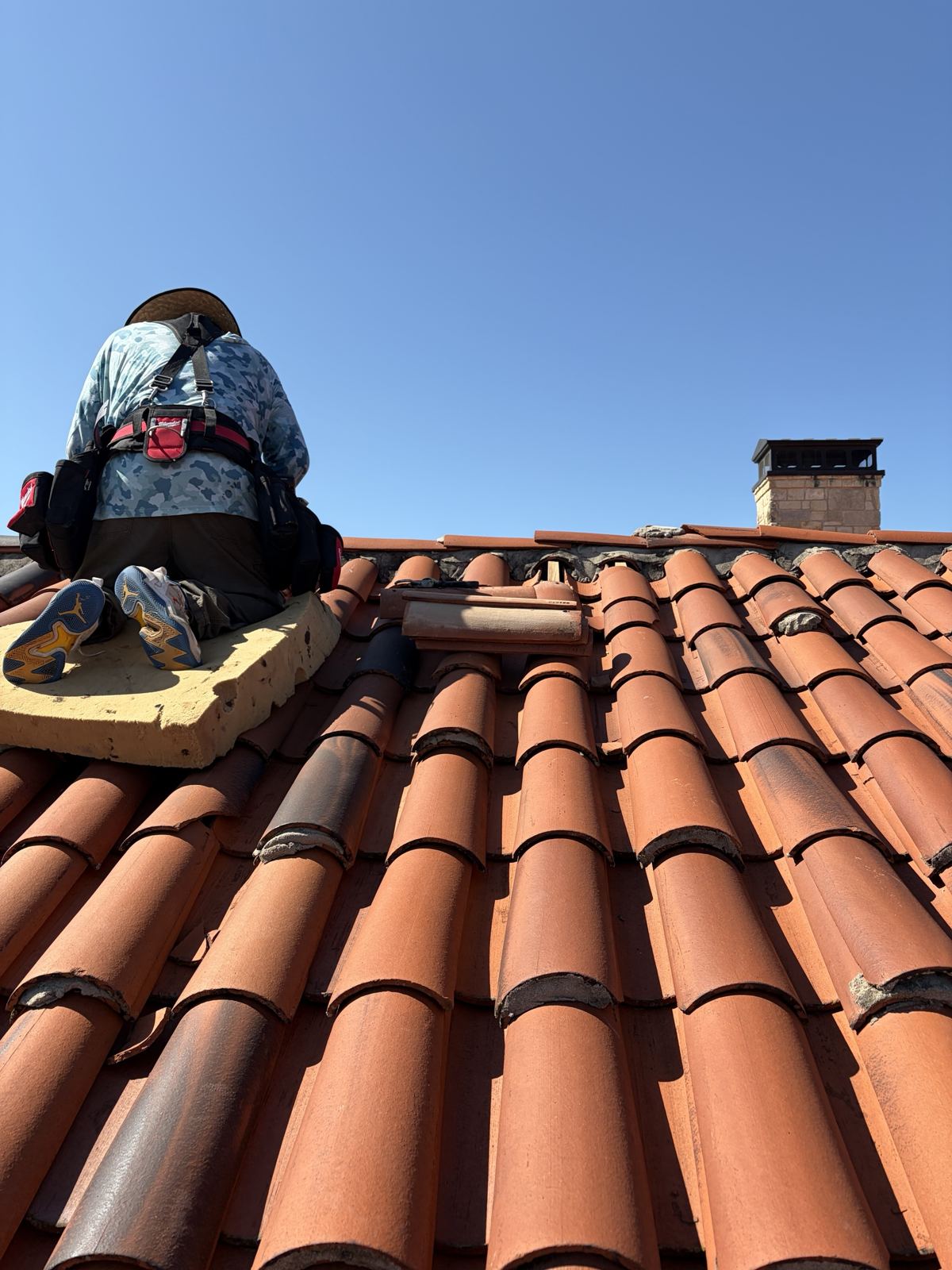
One example from Norman: a client Matt has handled tile repairs for since 2009 or 2010 lost ridge in the big windstorm that came through town, and the ridge broke tiles on the way off. Matt had the ridge and the broken tiles repaired the same week as the storm. Most wind damage on tile looks like that: a repair, not a new roof.
What homeowners ask before they call
Many homes are fine as-is; some need reinforcement. Matt checks your structure first and tells you the truth before you commit to anything.
Quality concrete and clay tile handle Oklahoma hail well, and individual broken tiles are replaceable — you don’t re-roof the whole house over one hailstone.
Most tile leaks are repairs, not replacements. Matt diagnoses the real cause and quotes the smallest fix that solves it.
What’s included
The details most crews skip are the details Matt checks on every job. Here’s what goes into the job:
- Full underlayment replacement with high-temperature membrane
- Correct batten and counter-batten spacing for airflow and drainage
- Lead and metal flashing formed at walls, valleys and penetrations
- Broken and slipped tile replacement color-matched to your roof
- Ridge and hip re-bedding where mortar has failed
- Debris haul-off and a full magnet sweep of the yard
The owner-on-every-job process
Owner inspection
Matt lifts tile where needed to see the underlayment and flashing — the parts that actually fail.
Honest diagnosis
You learn whether it is a spot repair, an underlayment renewal, or a full system — with the reasoning.
Careful removal
Sound tiles are set aside and reused; only failed underlayment and flashing are replaced.
System rebuild
New membrane, battens and flashing go down; tiles are reset and broken pieces color-matched.
Walkthrough
Matt walks the finished roof with you and shows you the flashing details most crews hide.
What it costs
Tile re-roofs and underlayment renewals vary widely with tile type and roof complexity. See the Transparent Pricing page for typical ranges.
Broken tile, discontinued profiles and tile roof leaks
Most tile roof repairs are underlayment and flashing work under tile that is still sound. When a tile profile is discontinued, replacement pieces come from salvage stock or from tiles harvested off a low-visibility slope of your own roof. Matt identifies the tile from its profile, dimensions and the maker's mark on the underside before promising a match.
Read: Tile roof repair in Oklahoma, discontinued profiles, matching and leaks
Tile Roofing questions
How long does a tile roof last?
The tile can last 50–100 years. The underlayment beneath it usually needs renewal at 20–30 years, which is where most “tile roof replacements” actually come from.
Can you match my existing tiles?
In most cases, yes. Matt sources matching profiles and colors, and reuses your existing sound tile wherever possible to keep the look consistent.
My tile roof leaks in one spot — do I need a whole new roof?
Usually not. A single leak is typically a flashing or cracked-tile issue. Matt finds the source and repairs it rather than selling you a roof you don’t need.
Get transparent pricing on Tile Roofing
Talk to Matt directly. Honest assessment, honest numbers, owner on every job.